Coastal Fog Navigation: A Beginner's Checklist for Using Marine Radar Safely
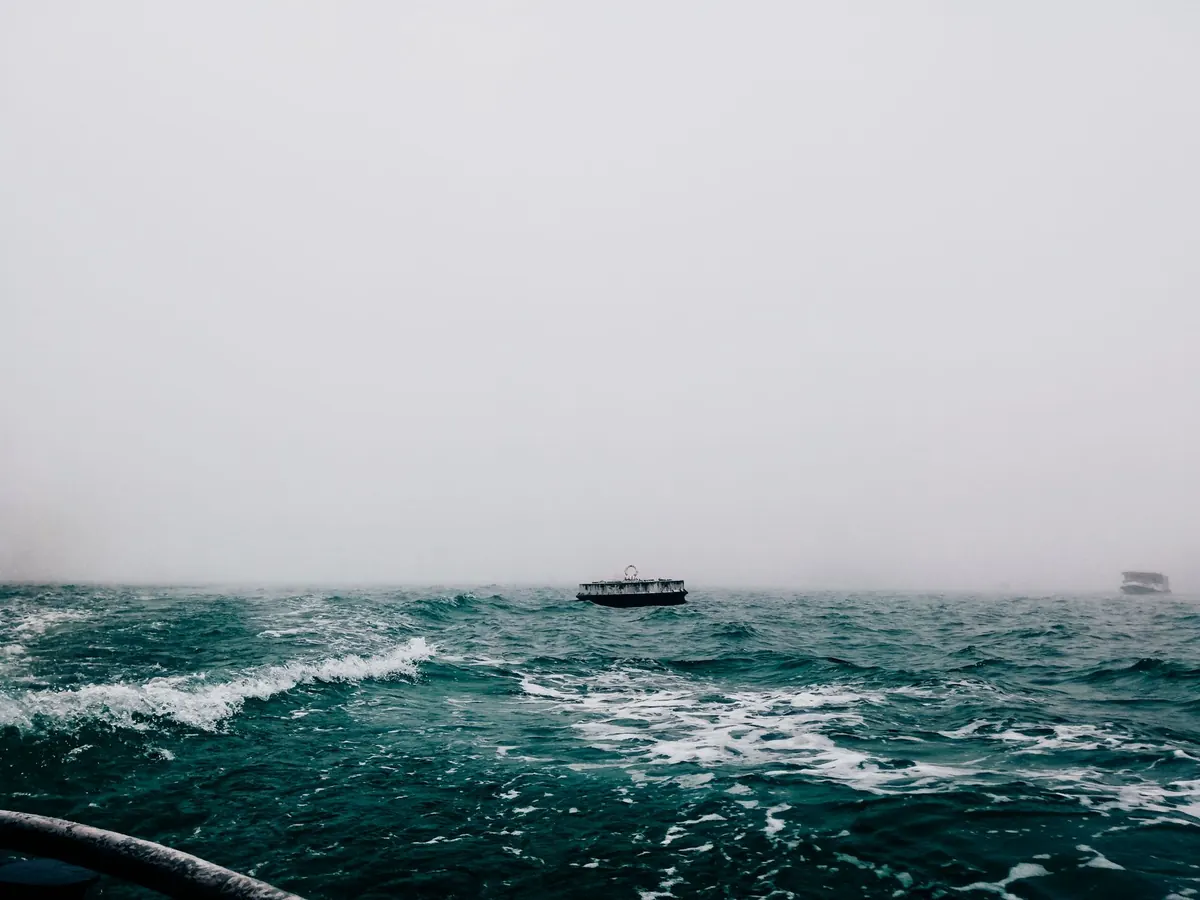
Fog rarely announces itself with drama. It arrives as a soft grey band beyond the harbour wall, and then the headland is gone, the buoys have vanished, and the engine note is suddenly the loudest thing on board. Radar gives you back part of that lost horizon, but only if it was switched on and set up before visibility collapsed, and only if you understand what the picture is and is not telling you. What follows is the routine worth running whenever the forecast hints at mist, plus the habits that keep the display honest once you are inside it.
Check the Set Before the Fog Does
First press of the power button should never happen as the wall of grey closes in. Magnetron sets need a few minutes to warm up and stabilise, and you want that time while you can still see the world to compare against the screen. Switch on at the berth or the mooring, let it settle, and run the self-test or performance monitor if your set has one.
Then do the check that too many skippers skip: the heading line. Pick a landmark or a buoy you can see clearly, put the electronic bearing line on it, and compare with the visual bearing. If the two disagree by more than a degree or two, your heading input is off and every plot you make will inherit that error. Fix it in the settings, or work in head-up mode and accept the limitation knowingly.
Walk around the boat while the scanner turns. Is anything in front of the antenna — a sail bag, a flag halyard, a crew member leaning on the radar arch? A mast ahead of the scanner blanks a wedge astern, and you need to know where that blind sector is before you rely on the screen. Finally, check the radar reflector is up and effective. In fog, being seen matters as much as seeing.
Set the Picture: Range, Orientation and Clutter
Fog navigation near a coast is pilotage, not offshore passage-making, and the settings should reflect that.
Range and orientation
For a harbour entrance or a run between headlands, a short scale of roughly 0.75 to 1.5 nautical miles gives you the detail to pick out breakwaters, moorings and small craft. Keep a second, wider scale of three to six miles for traffic approaching from seaward, and switch between them deliberately rather than leaving the set on a long range where everything collapses into a smear at the centre. Off-centring the display so most of the screen sits ahead of you is often more useful than a perfectly centred circle.
Head-up is intuitive: the picture matches the view through the window. North-up is stable, which makes plotting and comparing successive positions easier. Either works, but choose one and stay with it, because switching orientation mid-passage is how bearings get misread.
Gain, sea clutter and rain clutter
Turn the gain up until the screen fills with speckle, then ease it back until the speckle is only just visible. That setting shows weak echoes without drowning you in noise. Then deal with the two clutter controls, sparingly. Sea clutter suppression cleans up the near range in a swell, but pushed too far it also erases the small stuff — a dinghy, a pot buoy, a kayak. Rain clutter or FTC can clear a heavy shower, but it costs you small targets at exactly the distance where you need them. Use each control until the picture improves, then stop.
Plot, Don't Stare
An echo tells you where something was a moment ago. It does not tell you where it is going, and it certainly does not tell you what the other helm intends. Take a bearing and range with the EBL and VRM, wait a few minutes, and take them again. Two or three fixes are worth more than ten minutes of fixed staring.
The classic warning is a bearing that stays constant while the range falls: you are on a converging course. A bearing that drifts steadily aft while range closes usually means the other vessel will pass ahead of you — but confirm with the aspect. A long echo is a broadside view; a small, tight echo is something coming more or less end-on, and possibly fast.
ARPA and MARPA are useful, and worth using, but treat their tracks as a prompt rather than gospel. Small wooden boats, unlit craft, RIBs and anything in a steep sea can drop in and out of a track, and targets sometimes swap identities. Cross-check with AIS, which shows some vessels radar struggles with and misses plenty that radar catches. Nothing beats a visual confirmation when the fog thins for a second.
Radar answers "what is out there". It is much weaker at answering "what will that skipper do next".
Guard Zones and Alarms That Earn Their Place
Set a guard zone that sits just outside your intended track — a few tenths of a mile ahead is usually enough on a short coastal scale — and not so wide that every wave crest and channel buoy sets it off. An alarm that cries wolf gets muted, and a muted alarm is worse than none at all. Test it, learn its sound, and keep the volume high enough to hear over the engine.
Use the alarm for targets you have not already identified, not as a substitute for looking. If something is already inside the zone and closing, the alarm has done its job; your plotting now matters more than the beeping.
The Human Half of the Watch
In fog, slow down. Safe speed depends on visibility, traffic and how quickly you can stop, and none of those improve because you are behind schedule. If you have crew, put someone forward as a lookout, where engine noise masks less of the world, and agree on hand signals before you need them. Make the sound signals required in restricted visibility and listen for answers between your own. The rules on this are worth revising before the season starts rather than reading up on the spot.
Use the depth sounder and the chart together. Along a coast, a contour line is a position fix of sorts, and a deliberate check — "we should be in about twenty metres here" — catches errors that a plotter alone will happily hide. If the fog thickens beyond what you can manage, holding off or anchoring in a known, clear spot is a sound decision, not a failure.
The Ten-Minute Pre-Departure Checklist
- Switch radar on early and let it warm up and stabilise.
- Run the self-test or performance monitor; note any faults.
- Check the heading line against a known visual bearing.
- Confirm the scanner's view is clear and note any shadow sectors.
- Set brightness and contrast for the light you will actually have.
- Choose your short pilotage scale and a wider traffic scale.
- Tune gain, then sea and rain clutter, to the conditions.
- Set a sensible guard zone and confirm the alarm is audible.
- Rig the radar reflector and brief the crew on lookout duties.
- Agree a slow, safe speed and a bail-out anchorage in advance.
After the Fog Lifts
Before you tie up, write down the settings that worked and anything the radar missed. Then, on the next clear day, spend half an hour practising: identify known buoys and headlands, compare radar range with the chart, and see how small a boat looks at half a mile. That familiarity is what makes a foggy morning feel like a job you have done before rather than a test you are sitting. Radar rewards the skipper who has already learned its habits in good weather.
Photo: Christian Naccarato / Pexels